
Best SellerTop StoriesupdatesWomen of Influence
A Light That Never Dimmed: Farideh Gouhari
By Fatemeh Akbar Letellier
When I think of my Aunt Farideh, I don’t just think of the history books or the golden era of Iranian art she helped create. I think of her warmth, her unmistakable presence, and the quiet, unbreakable strength that carried her through every chapter of her life.
From my earliest childhood memories until the day she passed away, she was my guiding light. Growing up watching her move through the world with grace and determination gave me a gift I have carried my entire life: the deep, unshakable belief that I could achieve anything I set my mind to.
A Trailblazer with Heart
In the late 1960s and 1970s, Tehran was bursting with creative energy, and Aunt Farideh stood right at the center of it. When National Iranian Radio and Television (NIRT) was founded, television set design barely existed as an established profession in Iran. Fluent in French and steeped in European design traditions, she stepped forward to build and lead NIRT’s Set Design Unit (Vahed-e Decor) from the ground up.
She had a rare gift for turning a blank studio into a living, breathing world, yet her greatest legacy was how she lifted others up. Her department was a warm, nurturing sanctuary where she patiently mentored a new generation of young Iranian painters, architects, and graphic artists—including Ghobad Shiva—opening doors for them with generosity and care.
Her creative spirit reached far beyond the television studio. At the legendary Shiraz-Persepolis Festival of Arts, where performances unfolded beneath the open stars at ancient Persepolis and in the gardens of Hafeziyeh, Aunt Farideh helped bring ambitious, unforgettable stagings to life for live audiences and millions watching across the country. She designed sweeping sets and costumes for operas alongside the Tehran Symphony Orchestra, and shaped the visual soul of Iranian New Wave cinema in Parviz Kimiavi’s celebrated 1973 film, The Mongols (Mogholha).
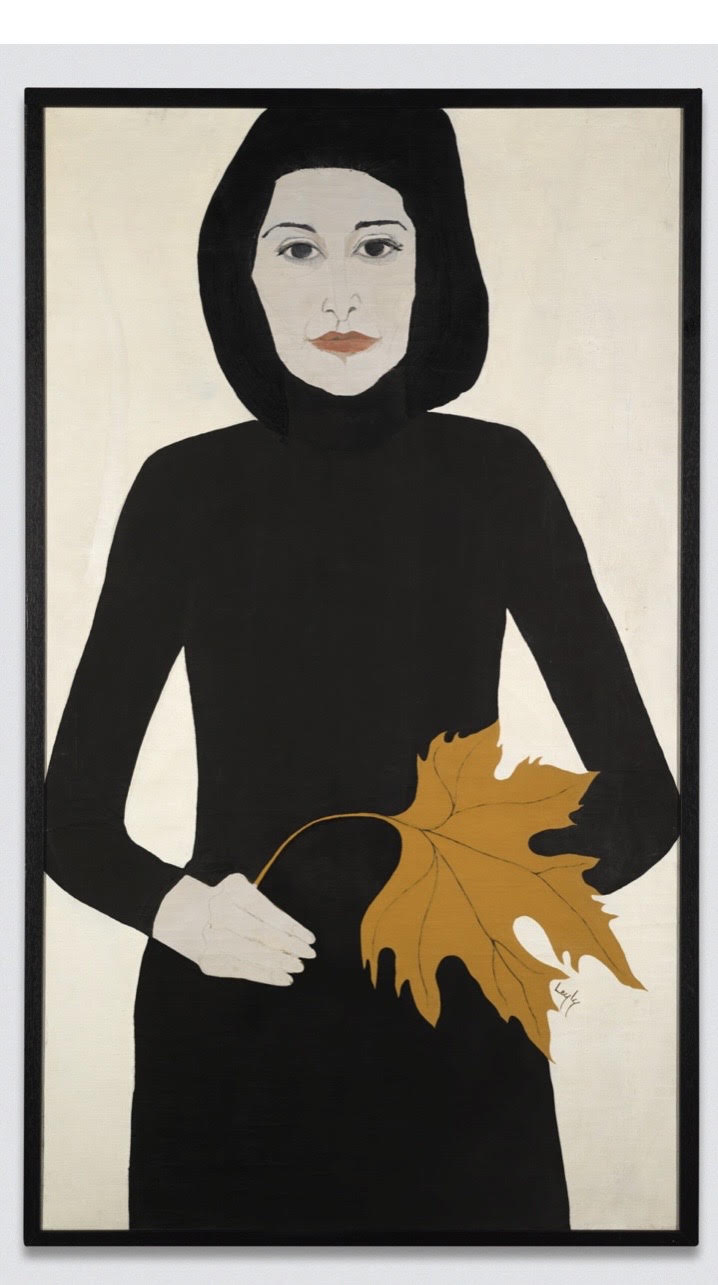
Around 1972, her dear friend, the renowned modernist painter Leyly Matine-Daftary, captured her spirit on canvas in Portrait of Farideh Gouhari. Looking at that painting today, you can still feel her poised dignity and quiet power.
Right before the revolution, when I turned 16, she invited me to Paris—not just for a birthday visit, but to immerse me in the world she loved. She took me from one art exhibit to the next and introduced me to her circle of artist friends, treating me as someone worthy of stepping into that rich, creative universe. Looking back, it was a precious window into a golden era on the cusp of change, and her way of opening my eyes to what a bold, cultured, independent life could look like.
Resilience in Exile
Then came 1979—a rupture that broke apart families, dismantled institutions, and scattered a generation of Iran’s brightest souls across the globe. Like so many extraordinary Iranians, Aunt Farideh was forced to leave behind her homeland, her life’s work, and the vibrant cultural world she had poured her soul into building.
She spent the rest of her life in exile in France. Her story is a deeply personal reminder of the devastating human toll of a regime that drove away its own finest minds and tried to erase their contributions from memory.
Yet exile could never extinguish her spirit or her generosity. Even when she was diagnosed with cancer, she faced the illness with breathtaking courage—fighting fiercely, with her head held high, until the very end. The last time I saw her in France before she passed, despite everything she was enduring, she made homemade stuffed grape leaves by hand so I would have something comforting and familiar to eat on my flight back to the United States. That was my Aunt Farideh: even while fighting for her life, she was still taking care of the people she loved.
Her Lasting Gift
There is a tired misconception in the world that Middle Eastern women are subservient or weak. My Aunt Farideh shattered that stereotype simply by being herself. She was a true powerhouse who led teams and helped shape a cultural renaissance, yet she carried her strength with tenderness, effortless class, and fierce conviction.
To me, she was never just a pioneer behind the camera. She was my hero. She showed me what true resilience looks like—how to build beauty from scratch, how to stand tall when the world turns upside down, and how to love deeply through it all.
In remembering Farideh Gouhari, I honor a woman who refused to be diminished by exile, by history, or by illness. Her light lives on in the art she helped create, in the memories she gave me, and forever in my heart.
